Open Today Sales: 9 AM-5 PMOpen Today Service: 8 AM-4 PM



Three-row luxury SUVs ask a lot of one vehicle: enough refinement to satisfy a luxury buyer, enough space to satisfy a family, and increasingly, enough electrified power to satisfy a shopper who wants both. The 2026 Volvo XC90, the 2026 BMW X5, and the 2026 Audi Q7 each answer that call in a different way. All three wear premium badges and turbocharged engines, but only one blends genuine three-row versatility with plug-in hybrid muscle and class-leading cargo space. Here is how the XC90, X5, and Q7 compare, and why the Volvo comes out on top.
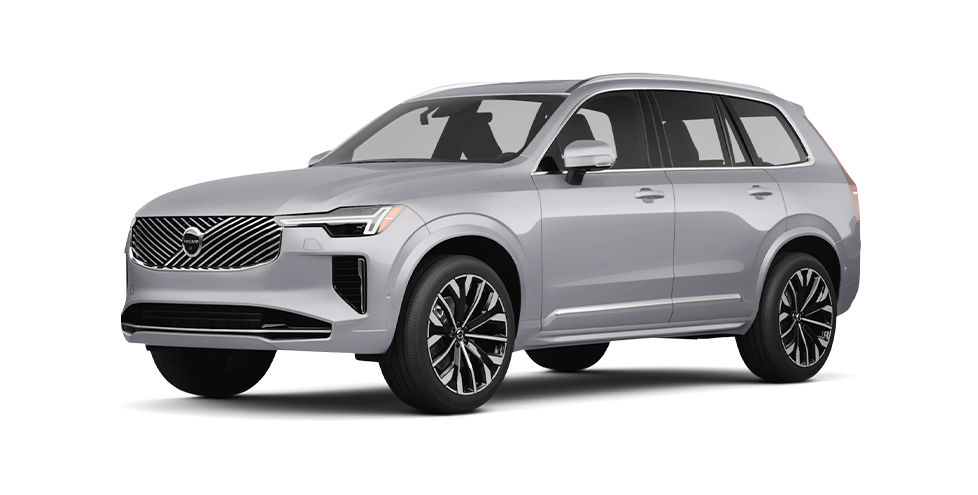
Every engine in this comparison arrives with some form of hybrid assistance and turbocharging, but the output varies widely by trim. The Volvo XC90 opens with a B5 mild hybrid four-cylinder producing 247 horsepower and 266 lb-ft of torque, with a twin-charged B6 upgrade available for 295 horsepower and 310 lb-ft. The Audi Q7 starts with a 261 horsepower turbocharged four-cylinder and steps up to a 335 horsepower V6. The BMW X5 arrives with the strongest gas engine of the three right out of the gate, a 375 horsepower turbocharged inline-six standard on the sDrive40i and xDrive40i. For a buyer who wants the most standalone horsepower without stepping up to a plug-in hybrid, the X5 has a genuine edge here.
Where the comparison shifts is in the plug-in hybrid lineup, and in what each automaker asks a buyer to give up for it. The XC90 T8 plug-in hybrid combines its turbocharged four-cylinder with an electric motor for a combined 455 horsepower and 523 lb-ft of torque, an EPA-estimated 32 miles of electric-only range, and 58 MPGe combined, all while keeping the same six or seven-passenger, three-row layout offered on every other XC90. The BMW X5 xDrive50e counters with more electrified output, 483 horsepower and an EPA-rated 38 miles of electric range, but that battery pack takes over the cargo floor of a vehicle that does not offer a third row in the first place, so the tradeoff for the extra range is a two-row SUV that seats five. The Audi Q7 does not offer a plug-in hybrid at all. That makes the XC90 the only vehicle in this comparison that pairs genuine electrified performance with a true seven-passenger cabin.
Family-hauling capability is where the XC90 pulls furthest ahead. Volvo builds every XC90, gas or plug-in hybrid, with a choice of six or seven-passenger seating and a proper third row, and the payoff shows up at the cargo bay. Fold both rear rows down and the XC90 opens up to 85.7 cubic feet of cargo space, more room than either German rival offers. The Audi Q7 also seats seven across three rows, with a maximum cargo volume of 69.6 cubic feet when the second and third rows are folded. The BMW X5, meanwhile, seats five passengers and tops out at 72.3 cubic feet with its second row folded. There is no three-row configuration available on the X5 at any trim or with any powertrain, plug-in hybrid included, which rules it out for buyers who need to seat six or seven.
Inside, the XC90’s Scandinavian-inspired cabin continues to stand apart from its German rivals, with leather upholstery, wood and aluminum accents, and a panoramic sunroof standard across the lineup. The Q7’s cabin is similarly upscale, with wide door pockets and comfortable front and second-row seats, though like most vehicles in this class its third row is best reserved for children on longer trips. The X5’s two-row cabin is spacious for its five occupants, with a 40/20/40 split-folding rear seat that adds cargo flexibility, but it simply is not built to compete on total passenger capacity.
All three SUVs come well equipped with modern infotainment. The XC90 pairs an 11.2-inch touchscreen with a 12.3-inch digital driver display and Google built-in, giving drivers native access to Google Maps and Google Assistant alongside Apple CarPlay and Android Auto, both connected via the center console’s USB-C port. The BMW X5 runs BMW’s iDrive 8.5 software across a curved dual-screen layout, and the Audi Q7 pairs its MMI touch response system with a 12.3-inch Audi virtual cockpit display, and unlike the XC90, both the X5 and Q7 offer wireless Apple CarPlay and Android Auto. Each brand offers a premium audio upgrade as well: the XC90 offers a Harman Kardon system standard on the Ultra trim with a Bowers & Wilkins system available above it, the X5 offers an available Bowers & Wilkins Diamond Surround Sound system, and the Q7 offers a Bang & Olufsen system standard on the Premium Plus trim and above.
Safety is where the XC90 leans on Volvo’s long-standing reputation. Pilot Assist, Volvo’s semi-autonomous highway driving system that combines adaptive cruise control with lane centering, comes standard on every XC90 trim, alongside standard City Safety collision avoidance, blind-spot monitoring, and rear cross-traffic alert. The XC90 also carries a five-star overall NHTSA safety rating. The Q7 offers a comparably strong standard suite, including adaptive cruise control with lane-centering assist across its lineup. The X5 comes standard with core protections like forward collision mitigation and lane departure warning, though its most advanced highway driver-assistance features are grouped into an optional package rather than included from the base trim up.
After comparing performance, comfort, technology, and safety, the 2026 Volvo XC90 stands out as the strongest choice among these three luxury SUVs. It is the only vehicle here that offers a plug-in hybrid without sacrificing a third row, it carries more maximum cargo capacity than either German rival, and it backs all of that with a driver-assistance suite that comes standard across the entire lineup rather than gated behind an options package. The BMW X5 counters with the strongest standalone horsepower in the group, and the Audi Q7 holds its own with three-row practicality of its own, but neither matches the complete package the XC90 delivers for families who need both space and sophistication.
Ready to see why the XC90 is the smarter three-row luxury SUV? Visit Delaney Volvo Cars Greensburg in Greensburg, PA to schedule your test drive today!
